
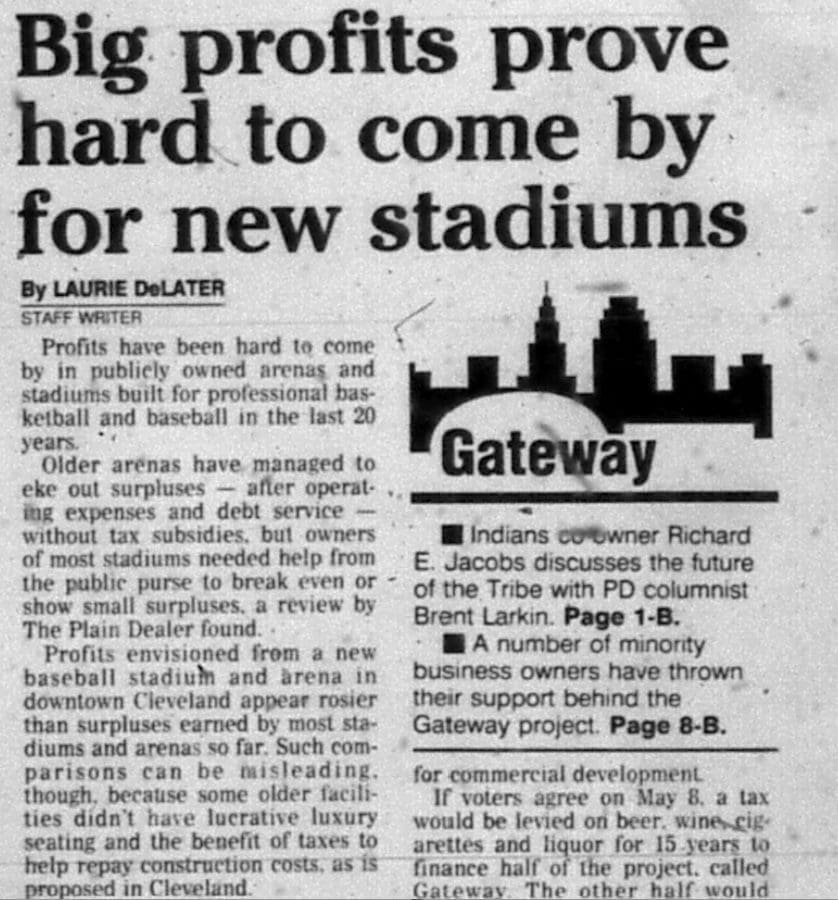
This website has written many times about the poor people of Cleveland. To summarize briefly, when Cleveland voters passed a bill in 1990 that increased a local sin tax, the revenues from this tax hike were supposed to pay for upgrades needed at the Cleveland Guardians and Cleveland Cavaliers venues. It hasn’t. Instead, the teams ask every year for millions of dollars that the city doesn’t have in their budget for upgrades that are not mandatory.
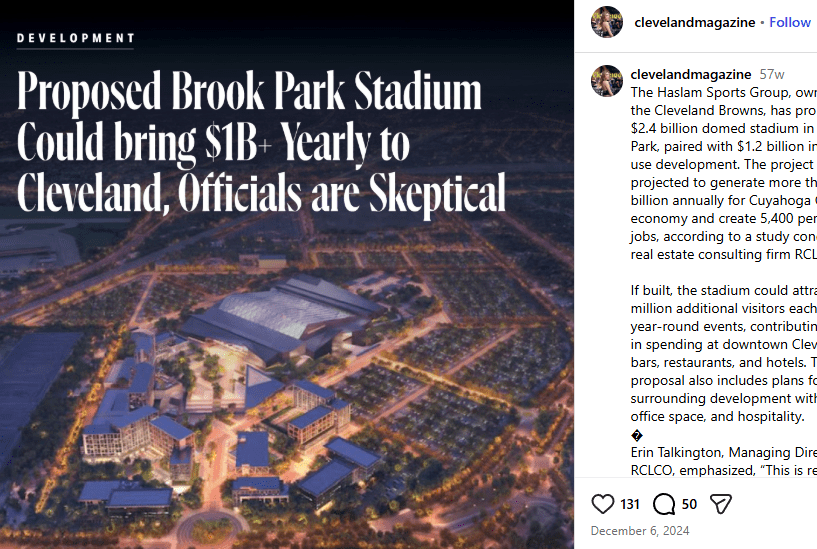
Now that the Browns are moving out of the downtown area, residents are left to deal with two billionaire owners demanding countless amounts of money for upgrades. Most rational people would look at this situation and wonder why an owner like the Cleveland Cavaliers Dan Gilbert, with a net worth north of $20B, is not paying for 100% of his arena upgrades. The answer is because he knows that he doesn’t have to pay for much, if anything at all, when it comes to his sports properties. He used his ownership of the Cavaliers to lower his taxable income and save himself close to $400M in taxes.
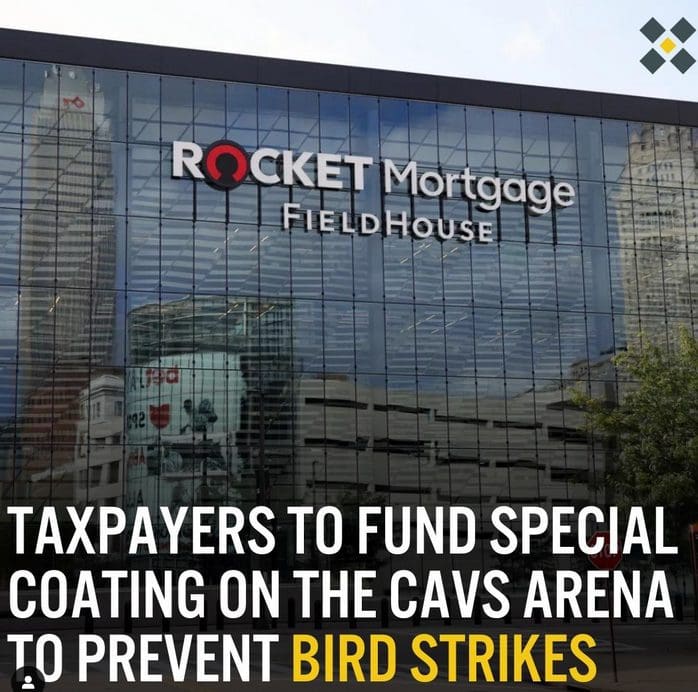
It doesn’t help that the lease agreement between the city and teams is arguably one of the most lopsided lease agreements in all of sports (Cincinnati’s is still the overall worst). Any repair or replacement over $500,000 at Rocket Arena is paid by the city. All capital repairs at Progressive Field are paid by the city. In November, an updated facility condition assessment was released that showed how the teams were likely to need over $400 million in capital repairs in the upcoming years. Let’s do some math…if every year the revenue from the sin tax brings in about $4-$5 million for each sports venue, how long will it take for the city to pay it off? 80 years at the earliest!

Last night, Crain’s Cleveland Business site put up a great article describing comments made by Nic Barlage, the CEO of the NBA’s Cleveland Cavaliers, at a City of Cleveland event. Barlage spoke for a few minutes and stated some interesting things:
- Even though the city faces a “massive funding gap” that will likely total over $400M worth of taxpayer money, the Cavs would like “to reframe the debate around public support for Rocket Arena and Progressive Field.”
How exactly should we reframe the conversation? I am not sure what the CEO means by that apart from him just wanting people to stop bringing up the topic in public.
- Cleveland residents should not look at the money being taken by the teams as “bailouts to billionaires” because the teams are “not looking for a handout…the public should recognize that this money is “not a giveaway to owners, but an investment in Cleveland’s future…the residents of Cleveland should “make sure” that they “celebrate these investments.”
If a city is giving a sports team $100M of taxpayer money, why should any resident care whether the team wanted it? The team took it, and the city doesn’t have $100M of its money in the bank account (in a way, you know what I mean). Plus, a team doesn’t just get money from a city/state. It asks or demands it. Therefore, the team is looking for a handout.
Oh, so a resident in Cleveland should look at the money going to the sports teams as an investment? Investment is defined in Oxford as “the action or process of investing money for profit or material result.” When will the public be getting this profit? Why would a single person celebrate this? If someone is struggling with a low-paying job and several kids, who expects this person to be happy when his sports team wants $300M for a new roof?
- Gilbert has “invested more than $200 million of his own money” into Rocket Arena.
Prove it. Show us. Because every sports owner says this, yet they never, ever back it up with receipts of any kind. This reminded me of when the NFL owners told the players to take a $1B cut in revenue during the 2011 lockout. The players responded with “Open Your Books,” and the owners refused and walked off.
- If city leaders want to change the terms of the lease, the Cavaliers are “open to the conversation.”
I have nothing else to say about this apart from…

- There are communities that are “growing faster than (Cleveland),” and these places have residents who “celebrate” when taxpayer money is given to the local sports teams because “they understand what they unlock.”
He failed to tell us where these communities could be found. I am waiting to see where this exists.
- The Cavaliers are “fully supportive” of the Cleveland Browns’ relocation because the Cavaliers see it as “private business making (a) private decision.”
Private this and private that, yet when the teams need money for upgrades? Let’s use the words on the Cavaliers official site. When the previous CEO of the Cavs stepped down, they released this statement praising him for “creating the public/private partnership agreement formed between the team, Cuyahoga County and City of Cleveland…on a renovated…(Rocket Arena).”
- Residents of Cleveland should have an “opportunistic mindset” so that they can see how the Browns’ new location will allow for the owner to “deploy significant amounts of private capital” to the city.
Ok, I get it. If we think happy thoughts, we will receive happy things. Maybe the sports owners can think happy thoughts when asking for money, and POOF, it will magically be given to them.
To be fair to Barlage, I am not sure if there is anything that he could possibly say that would make anyone feel better about the situation. But I still am astonished at how out-of-touch some sports executives can be when discussing finances.