Several months ago, I wrote a short post on the Chicago Bears being angry at city officials for thinking the city could tax them just like everyone else. To catch everyone up on the story, the Bears bought property in Arlington Heights for $197 million in 2022. This year, the county assessor put a value on that land reflecting the amount paid by the Bears. This angered the team because they wanted it much lower so they wouldn’t have to pay as much in property taxes. The Bears responded by claiming the value should just be $40 million, yet weeks earlier, the team bought the land for almost $200 million? No agreement was reached. Although the team tried to blame Arlington Heights for stopping the stadium development shortly after the negotiations broke down, both sides have been quiet for a few months.

How about today! Are they any closer?
“The Chicago Bears and local schools are $100 million apart on the property tax valuations of the former Arlington International Racecourse, where the team wants to build an enclosed stadium. The huge gap means that the two sides are likely to have difficulty reaching a compromise on the value and further complicates the team’s plan to move to Arlington Heights” — Chicago Tribune, 01/30/24
So, the answer is no. Not that close. According to the Tribune’s recent story, the Bears recently gave two appraisals to the city that valued the land at $60 million and $71 million. The city continues to assert that the value is closer to $160 million. Keep in mind that the Bears bought this property for almost $200 million in September 2021.
But the Bears didn’t just propose a slightly higher property value and that was it. Oh no. The Bears also have a new explanation for why they believe that their value is correct. According to the team, this property should now be considered “vacant residential land” while the city school district considers the land for commercial use. For those non-tax people, this is a big deal because residential properties are taxed at lower rates (10%) than commercial land (25%).
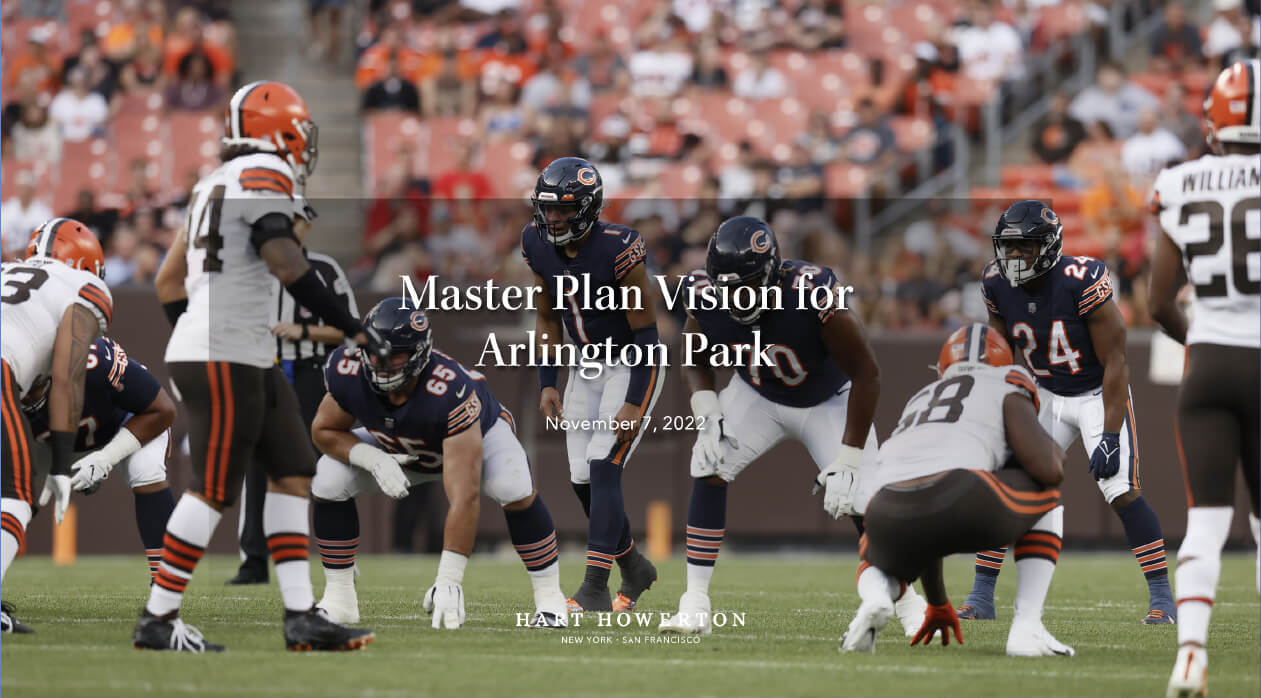
This new argument by the Bears makes no sense to me. The Bears have already talked about what they want to do on this land. Was I dreaming when I read the following: “The team has sketched out designs on a new entertainment district anchored by a $5 billion domed stadium”? Why would the city, much less anyone, allow the team to peg this land as vacant or residential land? Well, the Bears have an answer for that too. Months ago, the Bears tore down the racetrack that was previously used on this land. Nobody understood at the time why they were doing this when a stadium proposal had not yet been agreed upon with the city. Now, we know…so the Bears could have us look at the land and say…that is vacant! See?
But that is not how property assessments work. It is very common for assessors to look at future use and/or potential when assessing the land. Let’s assume for a second that the Bears are correct (which they are 100% not) in this being a residential piece of land.
Is an assessor allowed, under Illinois law, to look at other factors besides just the fair market value?
“The neighborhood should be analyzed to determine if the area is in a stage of growth, stability, or decline in order to estimate future use and value” — Illinois Department of Revenue, PTAX-1-A (R-04/23)

Illinois law allows for an assessor to look at the value of land through a “sales comparison” that evaluates the value of property by “observing and analyzing the selling prices of comparable properties”. Wait a second, didn’t the land just go on sale in late 2021? Maybe we could figure out the value by looking at how much it sold for?
“In September 2021, the Bears signed a purchase agreement for the Arlington International Racecourse property in suburban Arlington Heights, Ill. The 326-acre property was bought for $197.2 million” — Athletic, 02/15/23
Do I think the property should be raised six-fold due to the Bears purchase of the land? I don’t actually. But I do think the property is valued much closer to the city’s assessor’s price, rather than the Bears price.
The Bears can’t on one hand talk about a $5 billion dollar entertainment district, then pretend that the land is worthless. The Bears loved talking to fans about this $5 billion dollar campus in 2022.
“The team estimates the entire complex…will have an economic impact of $1.4 billion per year…$16 million annually in local tax revenue, plus $60 million per year in property tax revenue…Construction of the project would create 48,000 jobs, and the completed project would create 9,750 long-term jobs…include a multipurpose entertainment, commercial/retail and housing district that will provide considerable economic benefits…could include restaurants, office space, hotel, fitness center, new parks and open spaces, and other improvements” — Craig’s Chicago Business, 09/06/22
As the Tribune wrote in their most recent story on this issue, unless the two sides find some way to agree on a price, then a three-member board will decide on their own what the value should be. Just looking at some recent comments by people who may be on this three-member board, the Bears could end up winning big if they get the right people on the board.