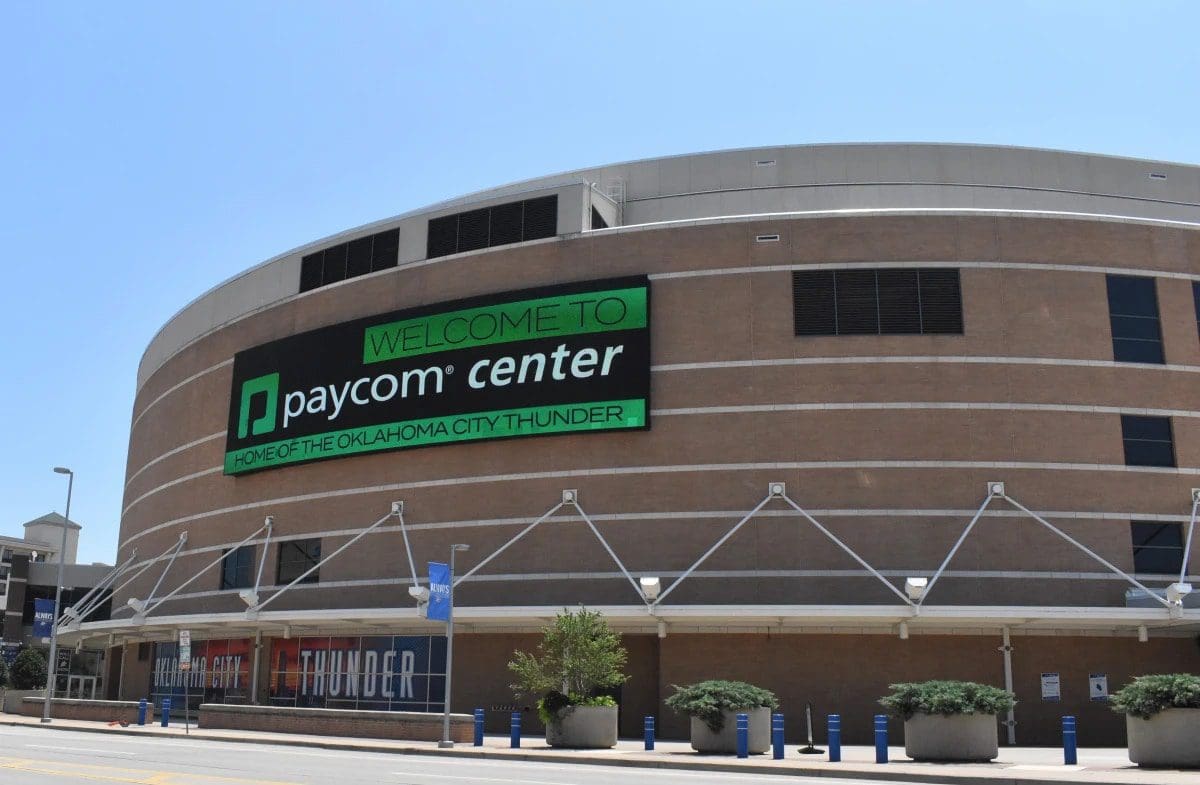
This week, the new owner of the Portland Trail Blazers, Tom Dundon, told Portland city leaders that he won’t negotiate with them until language is changed in the lease agreement between the city and the team. Specifically, Dundon is demanding the removal of language in the agreement that requires the team to keep the Moda Center (their home arena) in first-class condition. When an agreement includes a “First-Class Condition” or “State-of-the-Art” clause, it requires the facility owner (either the city/county or the team itself) to maintain, repair, and upgrade the venue so that it remains comparable to top-tier facilities in the league. This means Dundon is responsible for keeping the Moda Center up to this standard for the next 5 years (or whenever a lease extension is signed). If the city does this, Dundon says he will then continue to negotiate on a new lease agreement.
But wait, according to Dundon, the city will sue him if he tries to negotiate with them on venue upgrades while also having the first-class clause in the lease agreement. The Blazers President of Business Operations, Dewayne Hankins, told city officials that the first-class clause could be “wielded as a weapon” and that the team “cannot meaningfully negotiate details of a proposed new 20-year lease while the clause remains in place.” This is preposterous. The language in the lease agreement states that the city could seek damages “only if the Trail Blazers leave Portland.” That’s it. Furthermore, there are other teams in the NFL, NBA, and MLB that have first-class clauses in their lease agreements. This means that these teams have negotiated with their cities on venue upgrades WHILE having a first-class condition language. How many times have cities filed a lawsuit because of that clause? Zero…well, one in St. Louis, but we will get to that. Nobody wants to sue the local sports team while they are negotiating to keep the team in the area for many more years to come.
Dundon is causing this mess because he intends to relocate the team. There is no other logical way to view this situation. The first-class condition clause does not stop a team from negotiating with a city.

But let’s set aside Dundon’s motive behind this move. I want to talk about the first-class clause for a second. He wants the city to just remove this clause in exchange for what exactly? Talks about a lease extension? That’s it? I think it is pretty obvious that Dundon will not spend a dollar more than he must on the Moda Center. Yet, how many times have we seen teams force cities to pay large amounts of taxpayer money due to these first-class clauses? When team owners are the ones responsible for the venue, the first-class clauses seem to be irrelevant to everyone. Yet, when a city is responsible for it, the owner makes it an almost yearly tradition to demand new upgrades whenever he sees fit.
Let’s go over the difference of first-class clauses depending on who is responsible for the venue.
When a city/county must pay for first-class conditions:
- Cincinnati Bengals
In 1997, the Cincinnati Bengals and Hamilton County agreed to build a new stadium. Included in this agreement was a state-of-the-art clause that required taxpayers to pay for virtually every needed repair or improvement. Additionally, the agreement states that taxpayers must pay for all “new technologies in use by fourteen other NFL teams.” Considering how many new stadiums have been built since 1997, this has caused Hamilton County to spend a lot of taxpayer money on upgrades.
“According to the Bengals’ lease, if 14 NFL stadiums have something, then taxpayers must buy the Bengals that thing. It’s like if your parents were contractually obligated to buy you a new iPhone if all your friends got one, every year for 30 years, but if you were a billionaire and your parents were barely breaking even. Good deal for you, bad for your parents. Coincidentally, 14 new NFL stadiums have been built since Paul Brown Stadium opened, meaning any technology in these new stadiums has to be retroactively installed in Paul Brown Stadium as well. The taxpayers have zero recourse in this. The Bengals can simply bill the county for any qualifying state-of-the-art improvements, including a yet-to-be-invented “holographic replay system,” which they snuck into the lease for good measure” — Vice, 04/07/2015
This type of language led to many millions being spent on the stadium every off-season. As Cincinnati Magazine stated in an article at this time, the biggest reason for the financial issues came from the county being forced “to pay for everything from that new scoreboard to the stadium’s electric bill.” The finances became so bad for the city that the Wall Street Journal claimed that this deal was “one of the worst professional sports deals ever struck by a local government.” Any team that has this clause can get virtually anything that they want. Notice that whenever a team has this type of clause in their lease agreement, there is no definition of what defines state-of-the-art? How do you rank stadiums? Or rank locker rooms?

Before the stadium was approved, the Bengals promised local officials and taxpayers that the stadium would cost just $170M to build. In addition, the team promised that a stadium would bring new tax revenues to the area and that the city would have a $700M deficit by 2032. They were slightly off the target. If we include interest payments, the cost of the stadium for taxpayers is over $1B. What about those new tax revenues? They never materialized. Over the years, the Bengals have never given a crap about the city’s finances when demanding more taxpayer money for unnecessary upgrades. In 2003, the city was facing massive cuts to public services and a significant amount of other financial issues. The city approached the team to renegotiate the lease, and it “went nowhere.” When Cincinnati’s government was facing a $30M budget shortfall in 2011, the Bengals demanded “modest” upgrades that ended up costing $46M. Things were so terrible for the city that they were forced to raid any rainy day reserve that they could find, and refinance all bond payments. They also begged the local school system to delay getting money that was owed to the school. In 2008, Paul Brown Stadium debt accounted for 11% of the county’s general fund. In 2010, it was 16.4%.
As Vice put it, this entire situation is a “fiasco” for taxpayers. The stadium cost has more than doubled for taxpayers and continues “crippling Hamilton County’s budget.”
- Tennessee Titans
In 1996, the Houston Oilers owner signed a lease agreement with the city of Nashville and brought the NFL to Tennessee. This moved the team to Nashville and required the city to build and keep the stadium in “first class condition.” In 2022, the city began talks with the team on either upgrading the current stadium or building a brand new one. Because of the first-class clause, the city would be required to pay $1.8B of taxpayer money for upgrading the stadium. As the Nashville Business Journal wrote, “The $1.8 billion-plus estimate…throws into sharp relief the expense of complying with the terms of the current lease.”

As others have said in the Nashville media, it is difficult to express “just how much the lease favors the Titans.” In 2010, the city of Nashville was so desperate for money that they were forced to create a $2 per stadium ticket charge that all went to the Titans’ “renovations and improvements.” Within the next 12 months, the city moved that charge up to $3 because the Titans kept asking for so many upgrades. In 2016, the city ran out of all funds for the Titans stadium and was forced to borrow money to give the team. Please remember that the city is STILL making annual payments for money borrowed just to build the stadium in 1996-1997.
- St. Louis Rams
In 2012, the St. Louis Rams played in the Edward Jones Dome. The St. Louis Convention and Visitors Commission (CVC) operated the stadium. The lease agreement between CVC and the Rams required the stadium to be kept in the “top tier” (top 25%) of all NFL stadiums. But the CVC and Rams had different ideas on how much money would keep the stadium in the top 25% of the NFL. The CVC claimed that the stadium would be in the 25% with $124M worth of upgrades, while the Rams claimed that it would take over $700M. An arbitrator ruled for the Rams. The city refused to pay this amount of money, and that triggered a part of the lease agreement that allowed the Rams to leave town. Within months, the Rams had relocated to Los Angeles.

- Charlotte Hornets
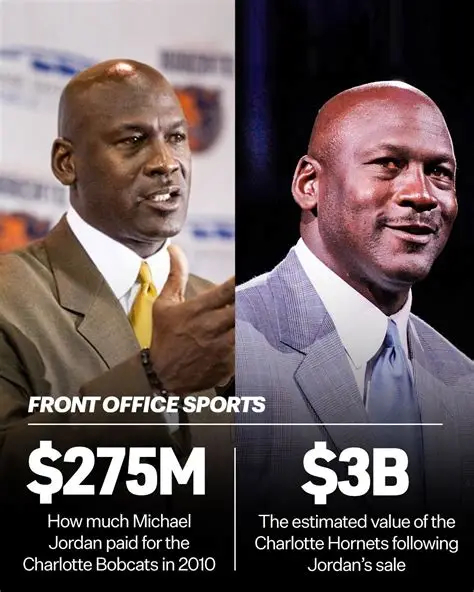
In 2002, the Charlotte Hornets relocated to New Orleans due to lease disputes between the team and the city of Charlotte. When the NBA awarded Charlotte another franchise, the city included language in the lease agreement that said the Spectrum Center (the Charlotte Hornets’ home court) must be “intermittently benchmarked against the rest of the NBA and, if needed, upgraded.” In 2019, the Hornets claimed that the arena needed $175M worth of upgrades. The lease required that the upgrades get done by 2022. In addition, the lease forced the city to pay for all “lease-required deferred maintenance projects, like replacing every seat in the arena.” Because the city did not want to lose another sports team, they caved and paid for the requested upgrades. As the Charlotte Business Journal summarized the upgrades, the “Hornets are embarking on a taxpayer-funded $215 million makeover of the Spectrum Center next year.” In 2025, the upgrades were finished, and a lease agreement kept the team in Charlotte until 2045.
The city caves whenever the team demands money. When the Hornets wanted to bring the All-Star game to town, the city handed over almost $60M for renovations.
When the team must pay for first-class conditions:
- Anaheim Angels
The lease agreement between the City of Anaheim and Angels Ownership for Angel Stadium includes language stating that the ballpark must be kept at a first-class maintenance standard. However, this time, it is the Angels ownership who is required to operate, repair, and maintain the stadium at its expense. Specifically, the lease states that the ballpark’s operational/maintenance standard must be “at least equal to first-class professional baseball stadiums.” Even though the team is required to pay for any upgrades or renovations, the city of Anaheim does contribute $700K every year into a Capital Reserve Fund, which was set up to “fund major structural upgrades.” If the Angels spend more money on repairs or improvements, the lease allows the team to credit themselves against future contributions to the reserve fund.
One big problem…nobody knows if the Angels are keeping the ballpark up to date. The lease allows for almost no effective public verification. The language in the lease doesn’t explicitly grant the city “routine right-of-entry inspection privileges.” This allowed the team to go from 1998 to 2023 (yes, 25 years) without inspecting Angel Stadium to verify if the team was fulfilling its first-class clause. When the city tried to inspect the ballpark in 2023 and 2024, the city had to spend months negotiating with the team. Eventually, the team allowed certain people access but also forced the city officials to sign “special access agreements.” Before then, the team consistently refused to let the city inspect the ballpark. In 2013, a report was released that estimated that the ballpark needed between $130M and $150M in repairs.
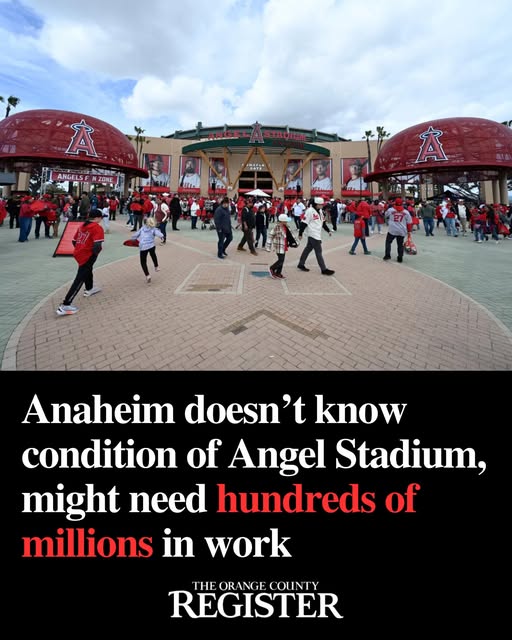
In 2024, the California State auditor released a report that noted how the city was being blocked from legitimately accessing the ballpark. It also mentions how the ballpark will most likely need hundreds of millions of dollars in unverified deferred maintenance. So the Angels pay for the upgrades, right? I mean, it says so in the lease. Not according to the Angels. The Angels owner has stated publicly that the ballpark needs “over $150 million in needed structural, electrical, and infrastructure upgrades.” Team officials have done interviews stating that the city should finance a large part of these costs.
Overall, it seems like the city just refuses to go that extra step and legally force the team to implement the language of the lease agreement. Why would the city never do this for over 25 years? Well, in 2022, the FBI began investigating the current mayor of Anaheim, Harry Sidhu. Eventually, the former mayor admitted to “illegally aided the Angels during negotiations by giving them access to confidential city records in exchange for an expected campaign contribution.” Things like this make you wonder who else has been in the pocket for the Angels over the years.
- Seattle Mariners
In 2018, the Seattle Mariners signed a new 25-year lease agreement with the city of Seattle (specifically, the city is called the Washington State Major League Baseball Stadium Public Facilities District Board). Included in the lease is language stating that the team must operate T-Mobile Park (their home ballpark) as a “first-class facility, consistent with other top-tier ballparks.” Additionally, T-Mobile Park must rank among the top 33% of all Major League Baseball ballparks. Because the team signed this lease agreement, they were given $135M of taxpayer money for ballpark “capital repairs.”
This lease agreement is quite specific (unlike most others that we have seen) in directing the team to “pay for all ballpark operation and routine maintenance costs.” However, there are several ways that the Mariners can get around the language. For example, while the Mariners are contractually obligated to pay for 100% of all routine ballpark operations and maintenance expenses, the lease agreement states that only “80% of the cost of all capital expenditures, operations and maintenance” for the ballpark “will be paid by the Mariners.”
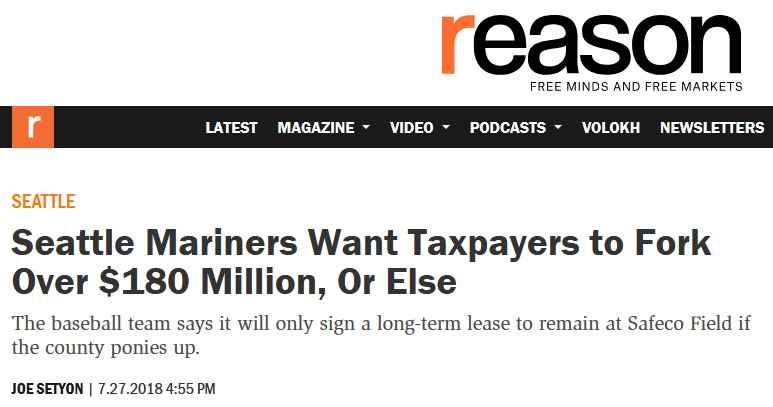
After the lease extension, the Mariners went on a PR tour with local and national media to thank taxpayers for protecting “an important public asset…community asset…for generations to come.” But before the 2018 lease extension, the Mariners had a slightly different argument:
“The Mariners have argued that they are footing the bill for the majority of the $800 million in fixes, upgrades and maintenance planned over the full 25-year lease, and that the public had an obligation to help with its costs because it is a publicly-owned stadium” — Seattle Times, 09/05/18
One of the final parts of the 2018 lease extension came down to where certain amounts of money would come from. Local officials decided to take money from the lodging/motel tax. The only catch was that this money was already earmarked for “affordable housing.” The Mariners took it anyway. Oh well, having a roof over your head isn’t that important anyway.
- Kansas City Royals/Chiefs
In 2006, the Royals’ previous owner agreed to a lease that required the team to keep their ballpark in “first-class condition consistent with other Major League Ballparks.” However, it should be noted that the Royals have continued to receive many millions of taxpayer dollars every year for repairs and upgrades. Over the last few years, the Royals have been trying to get a new ballpark built. One of their major reasons comes down to the condition of the current ballpark, which the Royals say needs “too much work to serve as the team’s long-time home.” The Royals owner has written letters to the public claiming that a new ballpark would be a “far better investment, both for the local taxpayer dollars already supporting our facility and the Kansas City community.” The Royals claim that if they were to stay at their current ballpark, over 70% would need to be rebuilt.

This surprised many city officials because the annual inspection reports say nothing about these massive problems. Since 2014, the city has hired a local engineering company to inspect the ballpark and “ensure that the teams are honoring the terms of their leases, which make them responsible for keeping the properties in good shape.” But the team decided to argue back with examples. A Royals official told people at a public meeting that the HVAC and electrical systems need replacement, multiple parts of the upper deck need to be replaced, and parts of the lower deck also must be replaced. According to the lease, the Royals operate “under a strict covenant requiring the stadium to be maintained to a level consistent with a first class MLB baseball stadium.”
Now, let’s be fair. The lease also allows the Royals to not pay for “major structural replacements” but only if the “useful life of that capital replacement would extend” beyond the date where the lease expires. Ok, I can understand the Royals therefore being off the hook for some of the massive fixes that they want. However, most of their complaints do not fall within this parameter. The Royals can and should be making upgrades to this ballpark according to the lease.
Conclusions:
Ultimately, when a city is responsible for the upgrades, they better do it, or else the team will relocate (Rams/Hornets) or threaten to file a lawsuit against the city/county (Bengals/Titans). However, a team that must pay for these same upgrades can either ignore it (Angels), simply not do it (Royals), or just get the public to pay for them anyway (Mariners).