
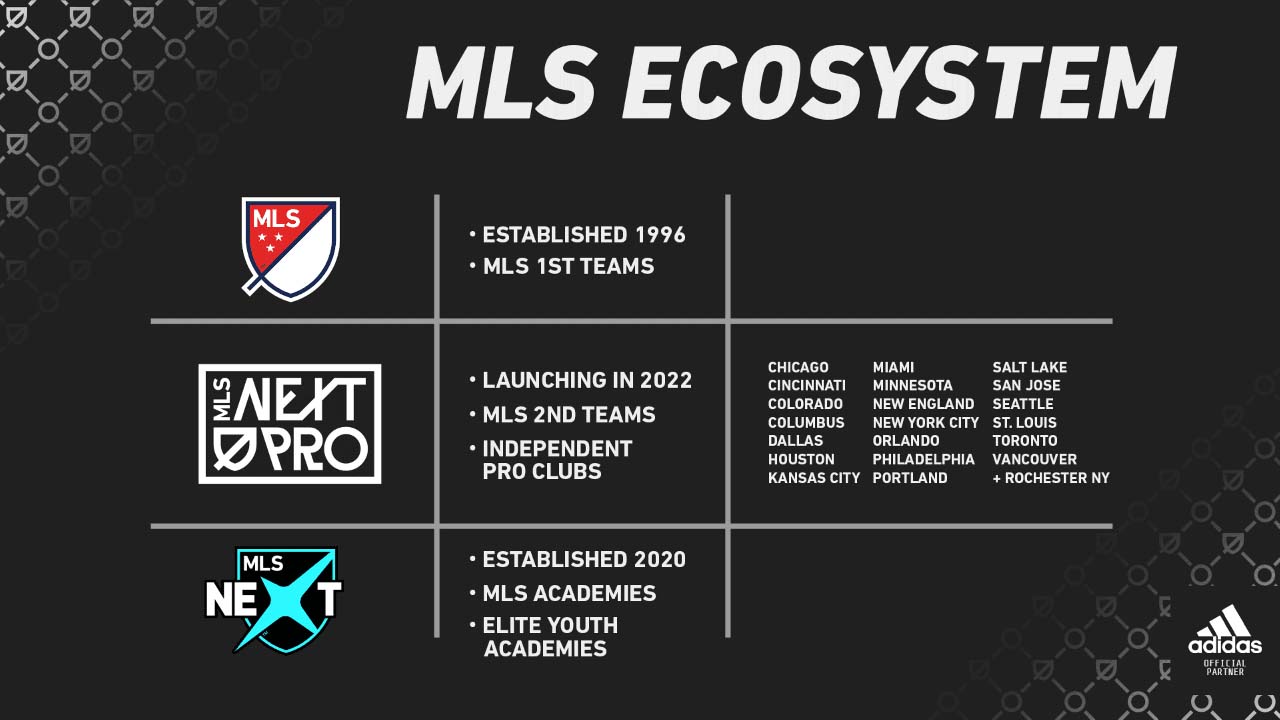
Last week, I discovered that a new minor league soccer team was awarded to a Connecticut businessman, a so-called “multimillionaire tech entrepreneur” named Andre Swanston. According to NBC Connecticut, the new team will be called Connecticut United Football Club and will compete in MLS Next Pro, essentially the minor leagues of Major League Soccer. At the initial press conference, the team announced that they intend to play in a new stadium for the 2025 season. Like every other owner of a sports team, the new millionaire owner made sure to give us ridiculous and completely baseless promises on how their new stadium will perform financially. Unlike every other sports venue every built, this new stadium would “generate $4.5 billion over the course of 25 years” as well as “create over 2,000 construction jobs and 1,000 permanent jobs”. Neither of which are even remotely possible by any independent calculation.
But then I saw the part of the story that made me roll my eyes. This new team will not start unless state and local taxpayers give millions to help build the new stadium. Apparently, the multimillionaire needs financial help to build this stadium, even though he will keep almost every single dollar of revenue collected from it. When it was first announced that soccer would be coming to Connecticut, Swanson didn’t come out and tell everyone that he required public money. He just kept the public guessing whether he would ask for taxpayer help. As one news site wrote at the time, “It was unclear…if taxpayer funds would be used for the project”. Now? Swanston claims that he “absolutely needs” taxpayer money to build a new stadium.
Even the Governor seems a bit annoyed at being asked to help fund the stadium:
At least one important decision-maker, however, isn’t quite convinced — Gov. Ned Lamont. Asked Thursday about the prospect of public funding for the new stadium, which would host a team in MLS Next Pro, a feeder minor league associated with Major League Soccer, Lamont sounded skeptical. “I am pretty cautious about that,” Lamont said. “But look, if the (private investors) really think that this is an amazing thing, and they’ve got the rights to professional soccer, they want to do that in Bridgeport, that’s wonderful, and go for it.” — CTInsider, 01/12/24
Maybe you are someone who thinks it may not be a terrible idea to give this multimillionaire a few dollars to get the new stadium completed. That is reasonable to me. But nobody is willing to say a single word about the ACTUAL finances of this deal. How much is Swanston actually putting in himself? We don’t know. Swanston continues to tell every media outlet that the team and stadium are “mostly privately financed” yet refuses to give us any additional information. I continue to see Swanston telling different media outlets how he has “invested millions of his own dollars into the project” yet then refuses to talk about it in more detail. How much is Swanston actually asking from taxpayers? We don’t know. When the Hearst Connecticut Media Group interviewed him recently, he “wouldn’t say how much funding he was seeking”. Considering this is public money, doesn’t that seem incredibly underhanded? Thankfully, one State Representative, Antonio Felipe, admitted to a local newspaper that “he knows how much money Swanston would likely seek from the state”…he just won’t tell the public.

Others may wonder, how would the state even pay for this new stadium? Isn’t the state dealing with a massive municipal budget hole? What about the insane need for middle-class housing? Isn’t the already built sports arena being renovated with state money? Didn’t the developer of a local amphitheater demand state funds to build a new music venue? Well, that State Representative mentioned above has a few ideas. Why don’t we take money from the poor and marginalized?
“Felipe, whose district includes the proposed stadium site, said funding could come from state bonding or the state’s Community Investment Fund, depending on the preference of legislative leaders. The CIF is an $875 million pot of money established by Connecticut lawmakers in 2021 to funnel aid to projects that benefit underserved and marginalized communities”. — CTInsider, 01/12/24
Lastly, let’s circle back and discuss Swanston claiming that his new stadium would generate “over $4 billion in economic impact” and create “2,000 construction jobs and 1,000 permanent jobs”. He got these numbers after paying the Connecticut Center for Economic Analysis (CCEA) at the University of Connecticut to write up a so-called estimate on the proposed stadium. How reliable is the CCEA? Well, let’s see how they did the last time a sports team announced they were coming to the area.
In 2014, the city came up with an economic-development plan to help the city of Hartford. They would build a minor league ballpark! According to the city, this ballpark, which cost taxpayers $70 million dollars to build, would easily pay for itself. The city council paid the CCEA to do an estimate, and the results supported that a new ballpark would “have a positive economic impact for the city”. How? The ballpark would “generate foot traffic in the area”, “attract private investment” and “(develop) with hotels, office, restaurants, retail and more”. The CCEA study estimated that the ballpark would generate over $350 million in economic growth, would create 1,806 jobs during the construction phase and an additional 1,000 long-term jobs.

How did all of these estimates work out? Terribly. To be fair to the CCEA, I am not sure anyone could have predicted what would follow. But I still believe the numbers given by the CCEA for the ballpark were ridiculous.
“However, a scheduled 2016 ballpark opening did not come to fruition as construction of the ballpark was marked by several delays and overruns, prompting the city to terminate its agreement with its original developers…by terminating an agreement to redevelop properties surrounding the ballpark…They ultimately played the entire 2016 season on the road before opening the facility in April 2017”. — BallparkDigest, 05/31/23
The developers eventually sued the city seeking $90 million in damages, and had liens placed on the properties that were targeted for redevelopment. Due to multiple lawsuits over the years, the city been prevented from moving forward with another strategy to bring economic activity to the area. After the city cut ties with the original developers, the former mayor and others went scorched earth on the developers by stating that the developers, in addition to being lazy, “never should have been chosen to build the ballpark”.

Years after the ballpark was built, the person who was commissioned by the Hartford city council to study the effects of a ballpark, University of Connecticut economist Fred Carstensen, acknowledged that the ballpark was and is a money loser. He just didn’t say that when he was paid to help write the original report. Instead, he would tell the city council that the ballpark details “stood out as highly positive”. Anyone who lives in Connecticut still likely remembers the state paying over $500 million for the failed Hartford stadium. Maybe they remember how in 1998, the state helped pay for a downtown minor league baseball team. That failed as well and the team no longer plays in the State.


