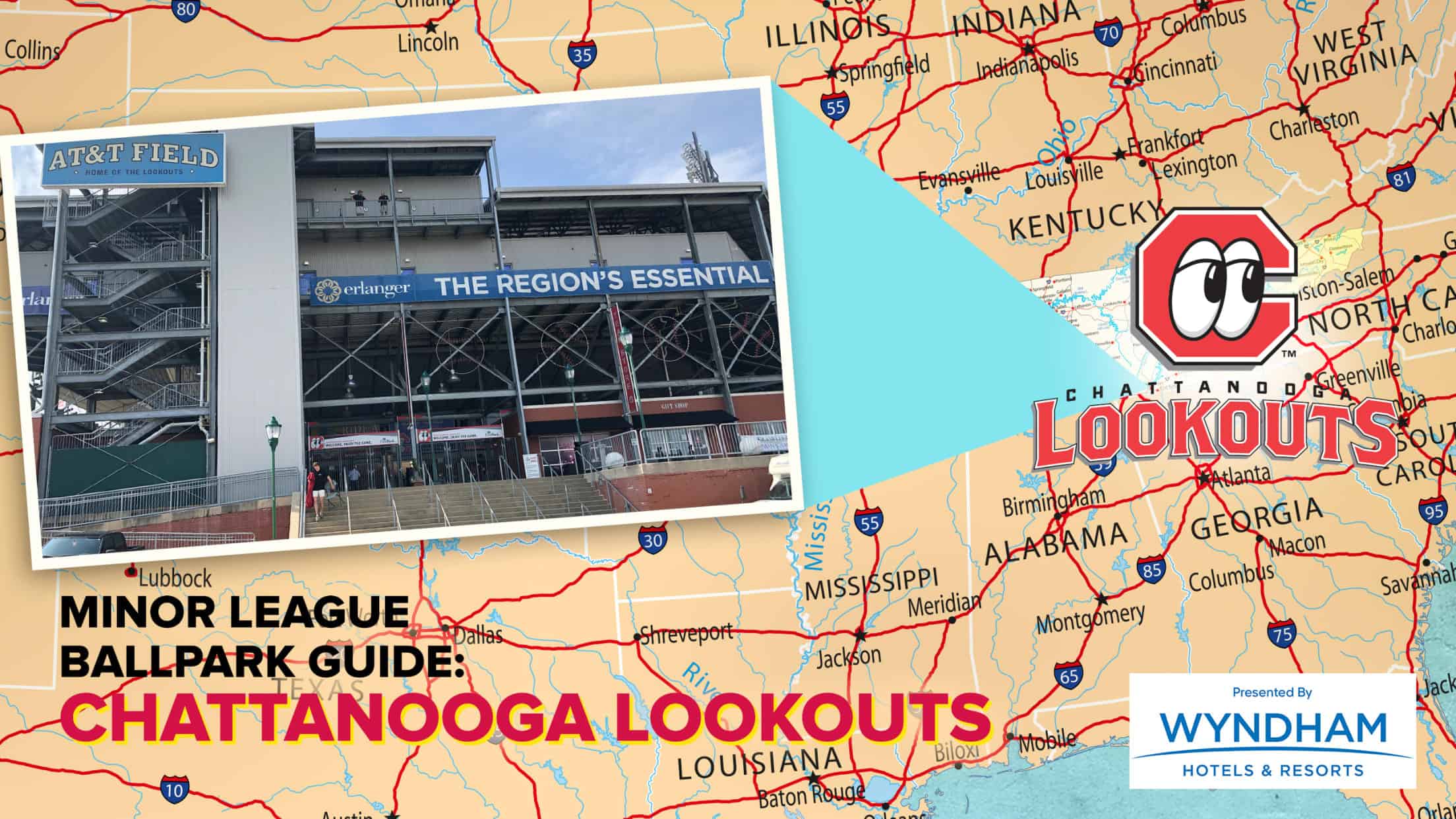
In Chattanooga, the price of their new ballpark continues to skyrocket. If you remember, two years ago, the city was facing fierce opposition from locals who didn’t want to give any taxpayer money towards a new ballpark. But the city decided that this new ballpark would be a “home run for the community” and approved the deal. This meant the city would be putting up roughly $80 million dollars for the project.
It wasn’t long before a nearby mayor questioned how this new project would be built for just the $80 million at stake. Then the cost of the ballpark went up $14 million dollars. Several weeks ago, city leaders announced that the price of the ballpark was rising yet again due to inflation and construction costs. The price of the ballpark has now risen to….$120 million. While the master developer of the project continues to tell local media that this is still a “great deal“, Hamilton County Mayor Weston Wamp seems to have had enough and mentioned to News Channel 9 that “the deal has certainly changed” and that it was time for “the developers and team owners…to be honest with taxpayers” about further unknown costs still left on the deal.
 – Tennessee Conservative News
What about the mayor of Chattanooga? He is as confident as ever about this ballpark paying for itself: “We are feeling increasingly comfortable that the project as a whole will comfortably foot the bill for the stadium”. This got me laughing a bit, as I have seen this statement mentioned so many times over the years. The history of saying that a new arena, ballpark or stadium will pay for itself is long and full of just awful predictions.
- In Pawtucket, Rhode Island, local officials repeatedly claimed that a new soccer stadium would “pay for itself” and be the “largest economic development project” in city history. It wasn’t. In fact, not only is the stadium not paying for itself, it struggles to generate 1/4th of the monthly debt payment for the stadium.
- When it comes to the Atlanta Braves minor league system, the ballpark failures are piling up.
- In 2005, Pearl, Mississippi built a new ballpark for $28 million dollars. Taxpayers paid for it all. The team just relocated away from Pearl, and the entire project was a financial failure.
- In 2008, Gwinnett County paid $60 million to build another minor league ballpark for the Braves organization. The county administrator at the time said the ballpark would “pay for itself from day one“. Let’s ask a local news station whether that has occurred: “It hasn’t come close”.
 – WTSP
- In 2006, Louisville was debating whether to build a new arena for the city with over $300 million taxpayer dollars. The Governor of Kentucky was doing media interviews, stating that everyone who gave money to this arena project would end up getting “all (of their) money back, and then some“. In fact, both the mayor of Louisville and the Governor of Kentucky continued to “emphasize (that) the arena will pay for itself” to anyone who would listen.
- Let’s see how they are doing years later:
- In 2004, Wichita residents were asked to vote on whether to spend $200 million on a new arena. The project was approved by just 5,o00 votes. Why vote yes on this? Because “it will somehow pay for itself through spillover economic benefit”. You have me sold, then.
- In 2010, the arena was finally built. And? It continues to be a struggle financially.
- In Vermont, one city was dead-set on building a new ice arena in 2013. What about the finances? Please. Let’s talk about the REAL issues. For example, supporters of this arena “not only thought it would pay for itself, but there was concern that there wouldn’t be enough ice time to go around”. But they did come up with a worst-case scenario. This called for the arena making zero net revenue.
- How did this turn out? Well, the arena has had constant maintenance issues and nobody in the area really wants to go to the arena. Let’s see how a local newspaper summarized it: “Stowe Arena won’t turn a profit anytime soon”.
 – Arc Publishing
- Last year, the Oakland A’s announced that they were relocating to Las Vegas to build a $1.5 billion ballpark/entertainment zone. The A’s were even being nice and only asking for $400 million of taxpayer money. Not $500 million like they previously asked for. According to one supporter of the move, this whole project was now “low-hanging fruit that (will) allow this property to pay for itself”.
- In 1998, San Diego voters approved millions to pay for a new ballpark for their local team. The public was “promised that new condos, hotels and shops nearby would drum up enough new cash to cover the cost of the ballpark”. This never happened. So, now the city is forced to move taxpayer money towards paying off the stadiums’ yearly debt payment.
- In 2019, the Sacramento Kings finally came to an agreement with the city on a deal to build a new arena and therefore stay in the city. The city would spend over $225 million dollars in taxpayer money. But as one Kings blogger wrote at the time, this arena would do wonders for the area. He notes that a new arena would “contribute millions in new sales tax, property tax, and other revenue” and we haven’t even talked about the development around the arena! According to this Kings fan, it was “clear that the economic perks associated with the new arena is far beyond expectations”.
- How did this turn out? Well, not great. The city is now using money that usually pays for police/firefighters, to pay off the arena debt.
 – WCPO
- In 2013, Nashville was trying to convince the public that a proposed new ballpark for a minor league team would “almost” pay for itself. Almost was used because the details showed how there was never a shot in hell of the ballpark ever paying for itself. The deal called on the city to take on $70 million in debt for the ballpark. Surely, the city must be rolling in money today, right? The city “has just over $102 million in outstanding debt payments, including interest”.
- In 2016, Cuyahoga County, i.e. Cleveland, hosted the NBA All-Star game. Before the All-Star game, the County gave the team $70 million taxpayer dollars to upgrade the arena. Over 18 years with interest, that is a total of $140 million dollars owed by taxpayers. Why do this? Because one county executive believes that “the financing will pay for itself“. His explanation for this was that there were no new taxes being added, nor was money being taken out of the county’s general fund. I am not sure this person understands how finances work. Just because taxes aren’t added or money is not being taken out of the general fund, there is absolutely zero evidence of the arena creating more money for the city from these arena upgrades. None.
- The Buffalo Bills got $850 million taxpayer dollars from New York. There isn’t a single document on earth that shows any possible way for the city or state to even come remotely close to seeing any type of successful return on this deal for taxpayers. Some think this may be the worst sports deal in the history of building stadiums. Thankfully, the team insists that the new stadium will eventually pay for itself. How? They don’t tell us that answer. They just repeat how “every dollar that goes into the stadium will be paid back” in interviews.
- The list of examples could go on. I found about 20 more examples that I am too tired to write about on this subject.


