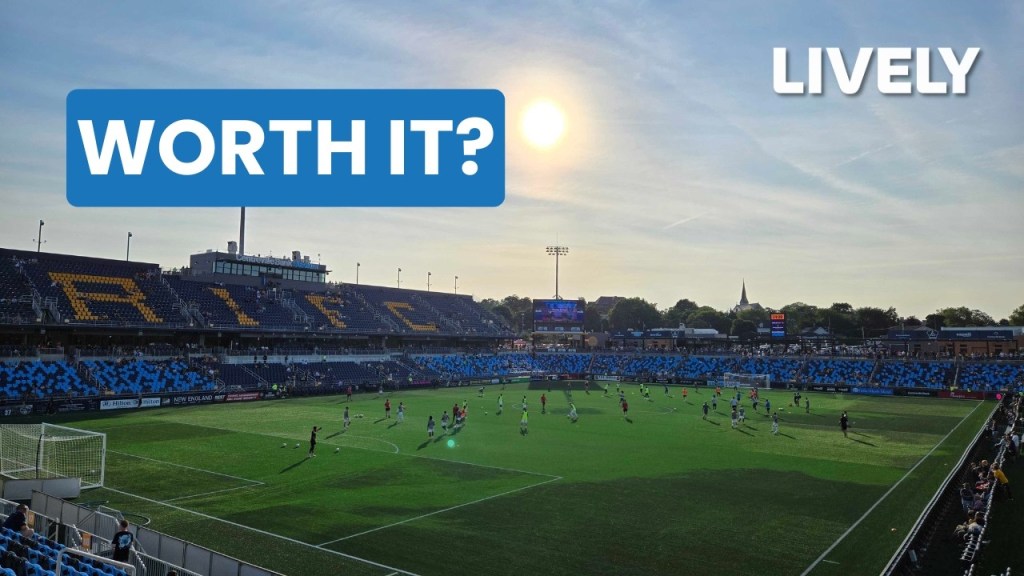
This week, the Providence Journal published an article highlighting the decline in attendance for Rhode Island FC (“RIFC”), despite team officials anticipating an increase due to the 2026 World Cup. I suppose this isn’t the best moment to mention that taxpayers will soon have to make their first yearly debt payment. The anticipated debt payment in the following year is projected to be $4.4M. The payments will conclude in 2053.
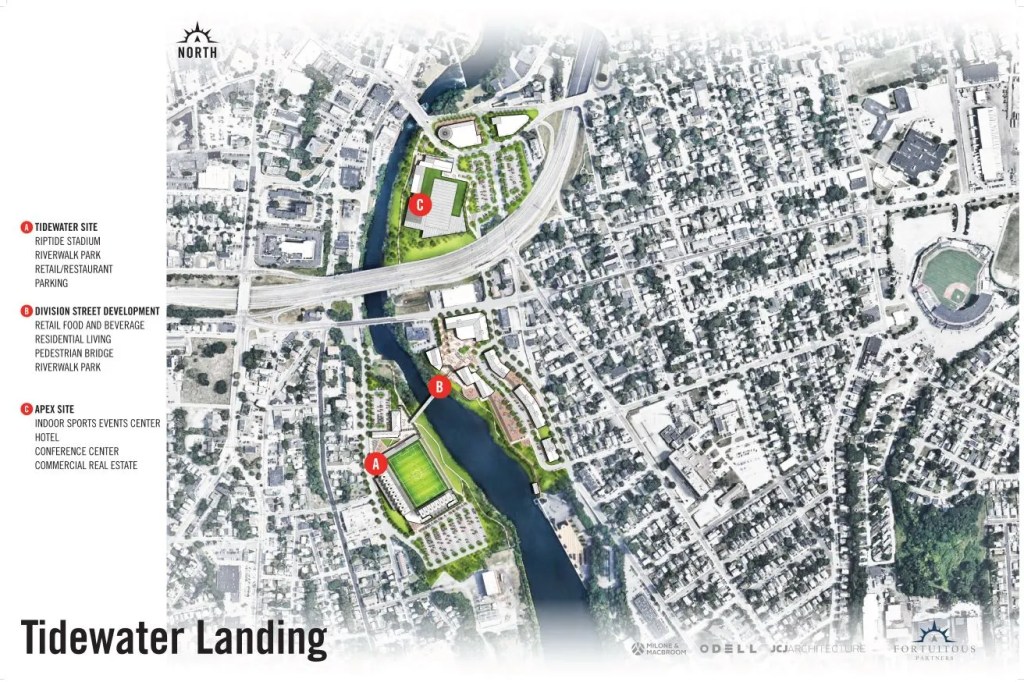
This maintains a pattern observed with RIFC. In 2019, the owners of RIFC revealed plans for a stadium project estimated to be worth $400 million, which included over 400 residential units, commercial space, and a parking garage. The developer of the project, Fortuitous Partners, claimed that it would allocate $27M of public funds that were initially intended for housing expenses in the neighborhood. The company spent the $27 million on the development of the soccer stadium. Remember that Fortuitous also obtained an additional $43 million in taxpayer funding through “subsidies, tax breaks, and infrastructure improvements.” Even so, the expense for the stadium increased to $137M.
For an unspecified reason, the state opted to propose a “rescue plan” that required taxpayers to cover the “ballooning costs of the soccer stadium.” As a result, taxpayers are now responsible for repaying $132M over a span of 30 years, including interest. Several media organizations started to realize that the expenses of this project were becoming “vastly more expensive than was initially expected.” The costs spiraled to the point that it turned into the “most expensive minor league soccer stadium in the country.”
But why did this project go so wrong, so quickly?
Research into Fortuitous
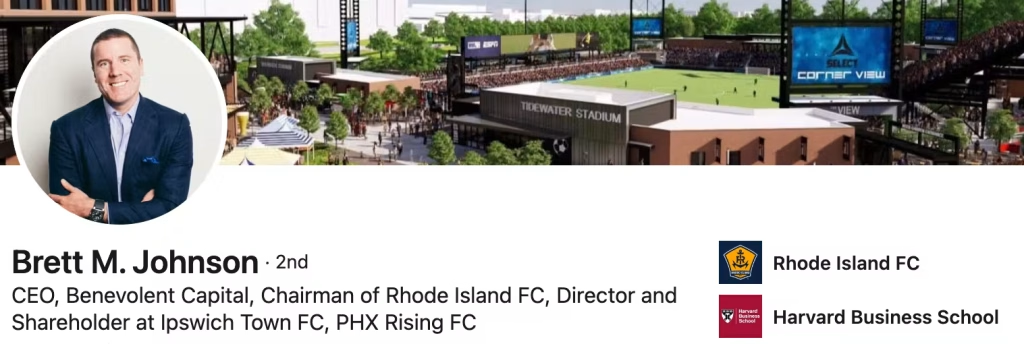
One possible explanation for the failure might be the insufficient research conducted by the city and state regarding the lead developer. This assumes that they did anything at all. A basic Google search for Fortuitous and its lead developer, Brett Johnson, reveals a trend of questionable actions and promises associated with him. Officials should have recognized a warning sign when Fortuitous returned only weeks after unveiling the $400M project, requesting an additional $30M. GoLocalProv did an outstanding job scrutinizing all the falsehoods presented in Johnson’s biography.
To briefly summarize:
- Johnson stated that he was the director of the Ipswich Town football club in Britain. He is not.
- In a press release, Johnson stated that a former company of his had “broken ground” in Los Angeles. This statement was false.
- Johnson puts his money into several businesses, one of which is facing a lawsuit for overstating its results.
- Johnson held ownership of FC Tucson for a duration of one year. During that period, Johnson asserted that the team had “transformed Tucson,” was “growing rapidly,” and would soon play in a new stadium downtown that would “develop a bunch of real estate around it.” He did not actually transform anything, the team did not experience any growth, and no stadium was built or even seriously discussed with city officials.
Officials were never clear about the project
It’s easy to understand why residents were upset about the entire project. City and state officials failed miserably in promoting this project. WPRI captured the situation well, noting that “officials have struggled…to provide clear information about the deal and how it will work.” The sole public opinion survey regarding this initiative indicated that community members were firmly against financing the stadium. The situation was worsened by local officials making numerous statements about the project that were either inaccurate or completely false.
At one stage, the city acknowledged that it was proceeding with the project without clarity on “where its share of the money will come from.” Additionally, local officials informed a public meeting that the stadium bond would finance both the stadium and the adjacent area, neglecting to disclose that agreements had been signed to allocate extra taxpayer funds to the project and that the government would “cover any shortfalls.” They must have forgotten to say this part out loud at the forum.
There were instances when the public was informed “repeatedly” that this “project would pay for itself.” There was just one slight problem. The project was never going to pay for itself. A local media outlet calculated that the stadium would not be able to “generate anywhere near enough tax revenue” to cover the annual debt-service payments. According to data from 2022, it was revealed that a new stadium would only manage to cover a mere 25% of the initial debt payment required from taxpayers.
The timing of everything was rushed.
Several officials obtained crucial information just 1 to 2 days prior to the required vote on these funds. On one occasion, officials arrived at a particular meeting and “were met with several pages of redlined edits.”
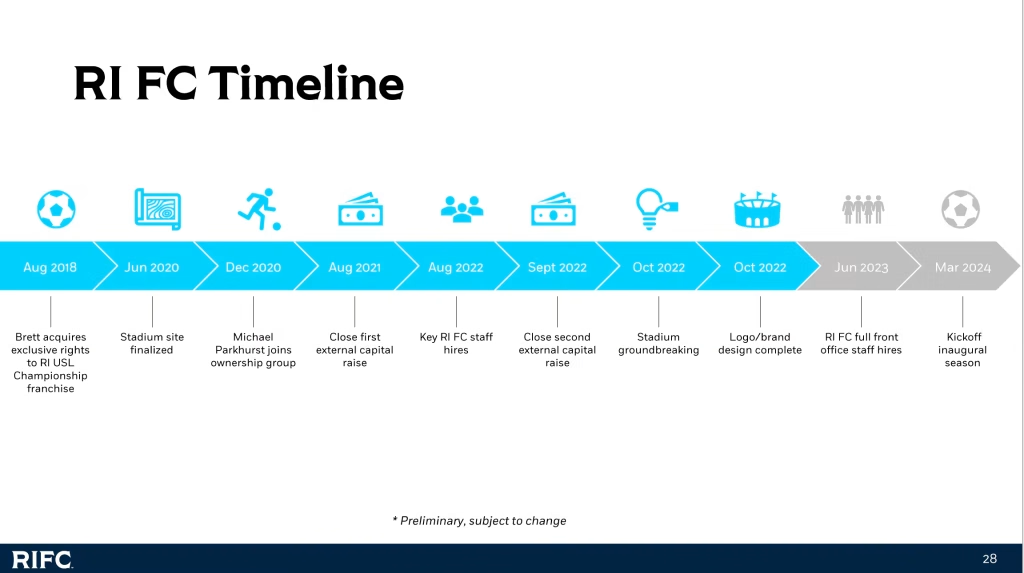
Following the approval of the project’s vote, several media outlets inquired about the timeline for future debt-service payments. This appears to be a sensible thing for us to be aware of. At this point in time, however, government officials were uncertain about various aspects of the approved project. They were unable to disclose this information as they had not yet obtained it. After several weeks, when the debt information was ultimately made public, it mentioned a different financial assessment conducted by a firm commissioned by the city of Pawtucket. When requested for the new report, the state declined to provide it and insisted that it remain concealed, while city officials “weren’t sure” about the contents of the report that warranted its secrecy.
Overall
It’s astonishing how unaware city and state officials were about both Fortuitous and the project itself prior to consenting to fund it:
- According to WPRI’s investigation, why was there no outcry when Fortuitous “refused to provide estimates” for the housing and commercial expenses?
- Due to the absence of financial projections, it was not feasible for anyone to determine the funds necessary to complete the entire project, estimate its future costs, or predict the potential revenue that might be returned to local authorities.
- By the way, is Fortuitous capable of securing the private capital necessary to finance its portion of this project? We’re unsure because “so far they haven’t disclosed their investors or fundraising benchmarks either publicly or privately to Commerce leaders.”
- Just a few months into 2026, the public found out that an NBA player was and has been an investor in the RIFC stadium project. Nobody knew this bit of information except for those at Fortuitous. As WPRI wondered, this type of information demonstrates “how little has been known about who was backing the stadium deal.”
How can taxpayers fund so much of this project and know so little?